Why Startups Rebrand and When They Should
Rebranding is not about changing your logo. It is about redefining how your startup is perceived. A good rebrand clarifies your value, sharpens your positioning, and opens doors you could not reach before. A bad one confuses your audience, slows momentum, and wastes valuable time.
For startups, timing is everything. Rebrand too early, and you risk fixing something that was not broken. Rebrand too late, and you lose credibility as your product grows past your identity.
So when does it make sense to rebrand?
- Your market has shifted and your current brand does not reflect your value
- You are expanding to new customer segments or geographies
- Your product has matured and the brand no longer fits
- You are not getting traction because your identity feels unclear or unprofessional
- You need to raise, pitch, or partner at a higher level
In all of these cases, rebranding is not about aesthetics. It is a business decision rooted in strategy.
The Anatomy of a Rebrand That Works
Here is what successful startup rebrands have in common:
1. A Strategic Foundation
Before changing anything visual, a strong rebrand starts with clarity. Who is your user? What are you really offering? Why do you matter?
This includes:
- Reworking your mission and vision
- Defining or refining your brand personality
- Clarifying your target audience
- Creating new messaging pillars
- Aligning internal teams before launch
If you do not have answers to these, you are not ready to rebrand. Design should follow strategy, not lead it.
2. Distinct Visual Identity
Once the strategy is sharp, your new identity should reflect it. A good brand identity is not just pretty, it is ownable and repeatable. You should be able to recognise it even without the logo.
This includes:
- A flexible logo system
- A bold colour palette that fits your market
- Clear typography and grid systems
- Visual elements that express tone and value
- Rules for consistency across web, mobile, and marketing
Great rebrands feel fresh, but still familiar to your audience. They make you look as credible as you actually are.
3. Consistent Execution
A rebrand is not finished when the new style guide is approved. It succeeds when every touchpoint reflects the new identity.
This means updating:
- Website and landing pages
- Product UI
- Pitch decks and investor material
- Email templates, social media, and ads
- Sales collateral and app stores
Consistency builds recognition, and recognition builds trust.
Case Study: XRii’s Brand Transformation
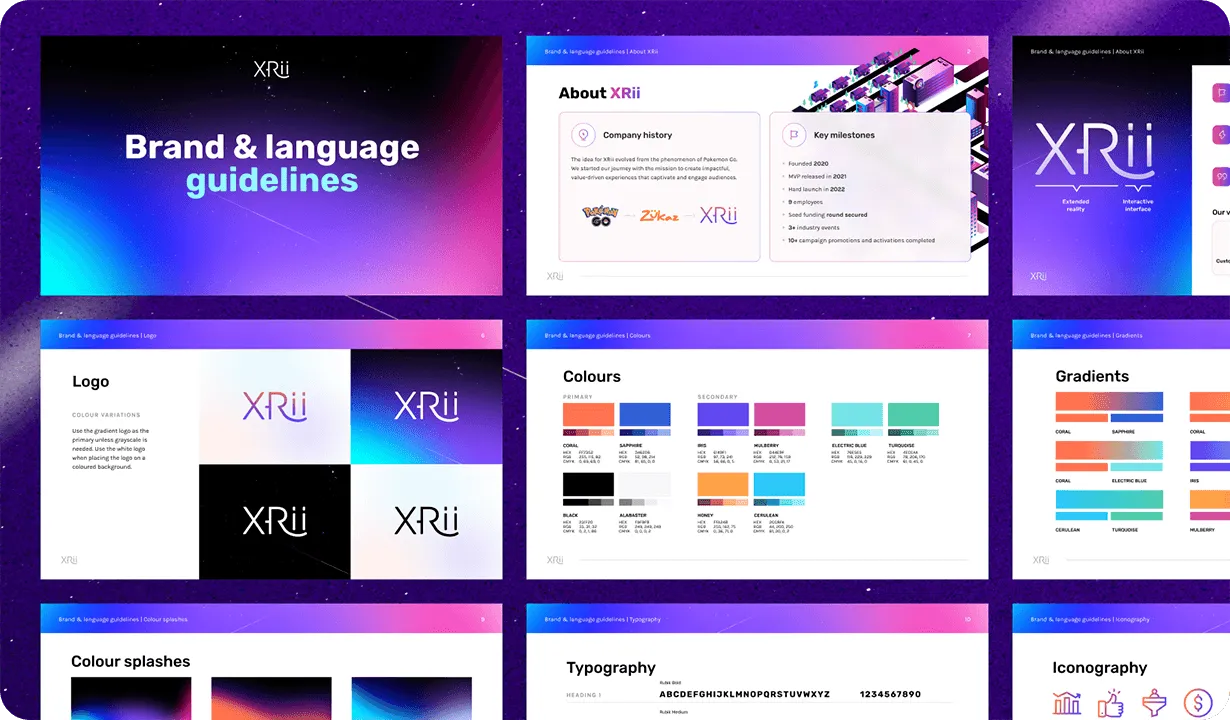
XRii, a powerful AR startup, had the tech and the traction but lacked a brand identity that reflected its innovation. Their product was world class, but their visuals looked like they came from a different era.
They partnered with Blabb Studio to change that.
Together, we:
- Created a sharp new identity that felt futuristic and confident
- Designed an interface that brought their AR capabilities to life
- Built brand assets that worked across app, marketing, and investor decks
- Focused on visuals that felt fun, flexible, and professional
- Developed a scalable design system to support their roadmap
The result was not just a better looking product. It was a brand that finally matched XRii’s vision. Their new identity helped them stand out in a competitive space and pitch at a higher level.
Avoid These Common Rebrand Mistakes
1. Changing without a reason
If your current brand is working, a rebrand might not help. Startups sometimes chase a “fresh look” without solving a core problem. A rebrand should have a clear objective, not just a creative impulse.
2. Doing it in isolation
Rebranding affects your team, users, and stakeholders. If you do it in a silo, you risk misalignment or confusion. Engage your internal team and test with real users before going public.
3. Overcomplicating the message
Your brand needs to say one clear thing. If your new brand confuses people more than the old one, it failed. Strip down the message. Simplify the design. Clarity wins.
What to Measure After a Rebrand
A successful rebrand should not just look good. It should improve performance.
Here are things to measure:
- Brand awareness or direct traffic increase
- Higher engagement on site or product
- Improved conversion on landing pages
- Reduced bounce or confusion rates
- Positive feedback from investors and users
A rebrand is not a vanity play. It should directly impact how your product performs and how your story is received.
When to Rebrand and When to Refine
Not every startup needs a full rebrand. Sometimes, a brand refresh is enough.
If your visuals are outdated but your message is clear, you might just need a design update. If your product name is still relevant and your audience loves you, do not change for the sake of it.
You can refresh by:
- Updating your colour palette or typography
- Redesigning your site layout
- Cleaning up your logo or brand marks
- Simplifying your UX without changing everything
Start with what is working and build from there. Brand equity takes time to earn. Do not throw it away unless you need to.
Case Study: TurfStar’s Rebrand for Scale
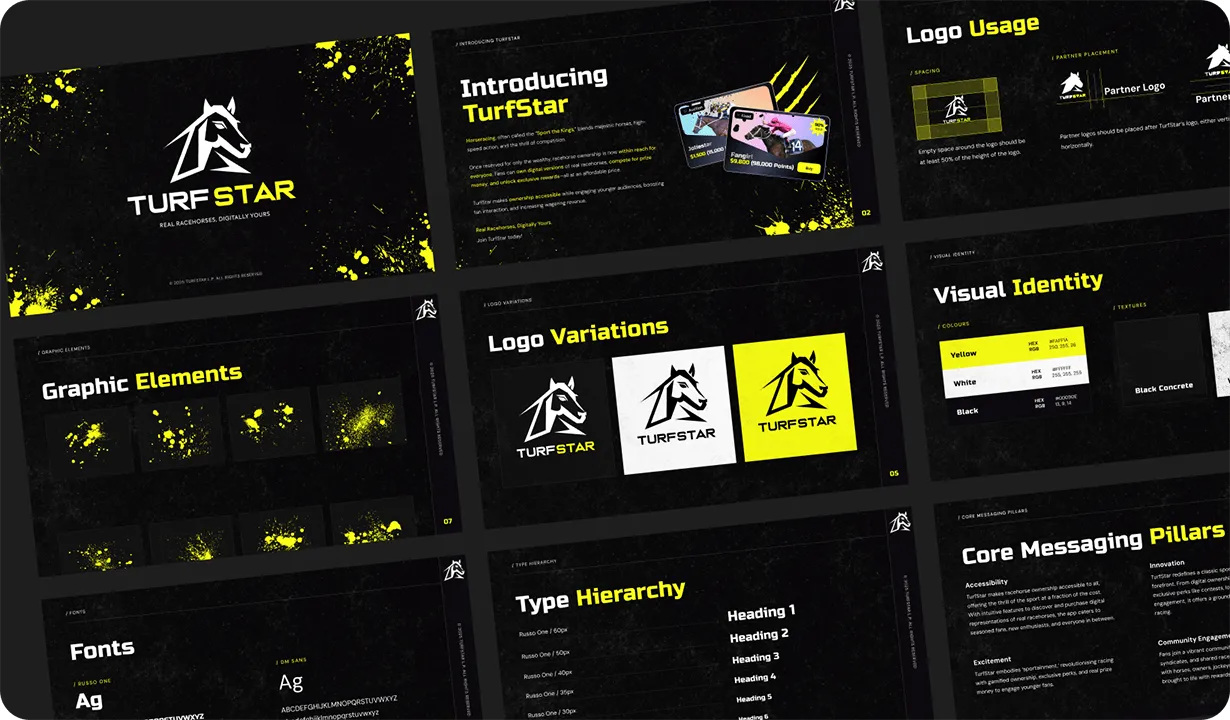
TurfStar is a startup bringing gamified digital horse ownership to a new generation. Their original brand was playful, but not built for scale. It did not reflect the high stakes of the racing world or the serious innovation behind their product. Blabb Studio was brought in to turn it up.
We worked with TurfStar to:
- Create a sleek, premium brand that appealed to younger investors and fans
- Develop immersive 3D visuals that showcased the product in action
- Build a Webflow site that explained their story with clarity and excitement
- Redesign product UI to simplify navigation and increase retention
- Position them for both user growth and serious investor attention
The result was a rebrand that felt credible and cool. TurfStar went on to win multiple global design awards and attracted funding interest as a result of their improved presence.
How to Plan Your Own Rebrand
If you are considering a rebrand, here is a quick checklist to start:
- Do we have a strategic reason for rebranding?
- What do our users say about our current brand?
- Are we shifting markets, audiences, or product scope?
- What do we want our brand to say that it currently does not?
- Who are we competing against, and how do they show up?
Once you know these answers, work with a team that can turn strategy into visuals and visuals into growth.
About Us
Blabb Studio is a spicy design and Webflow development studio built for startup founders. We help early-stage teams level up their branding, UX, and digital presence so they can grow faster, look credible, and close the deals that matter.
We have worked with brands like XRii, TurfStar, DraftBet, and more, helping startups raise capital, expand into new markets, and win industry awards.
To see more of our rebrand work or start your own transformation, visit blabb.studio/about or contact us to learn how we can help your startup grow.